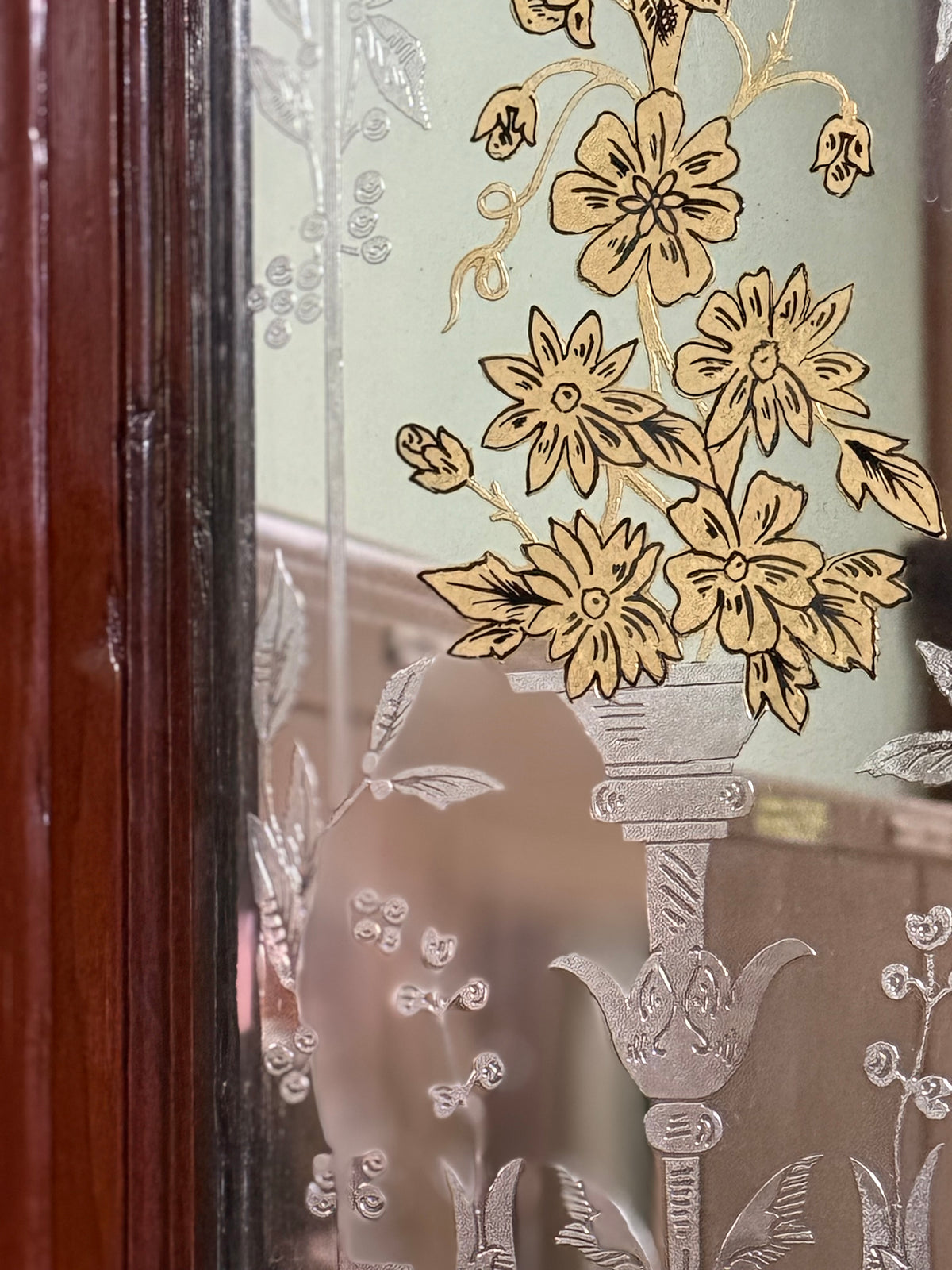
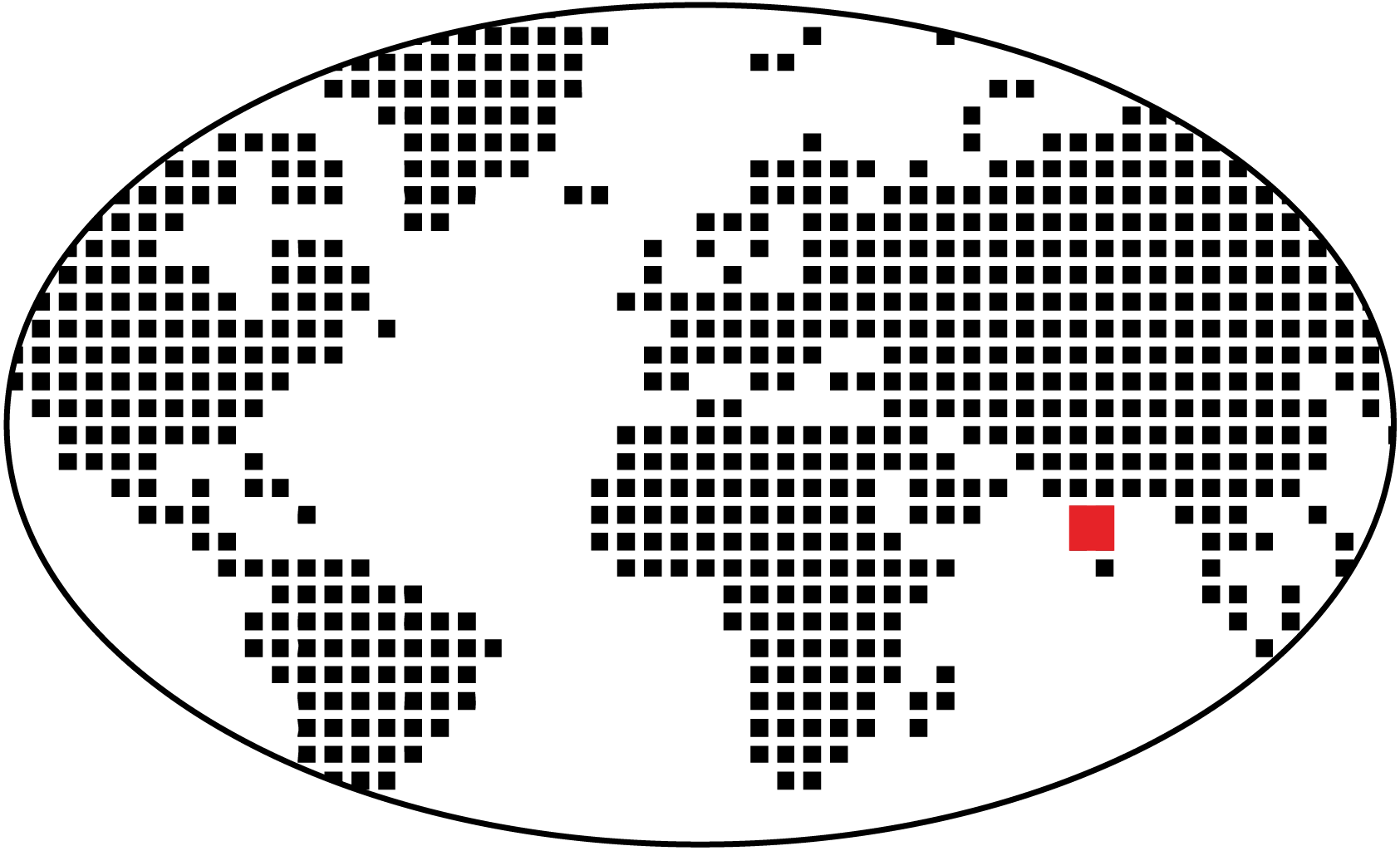
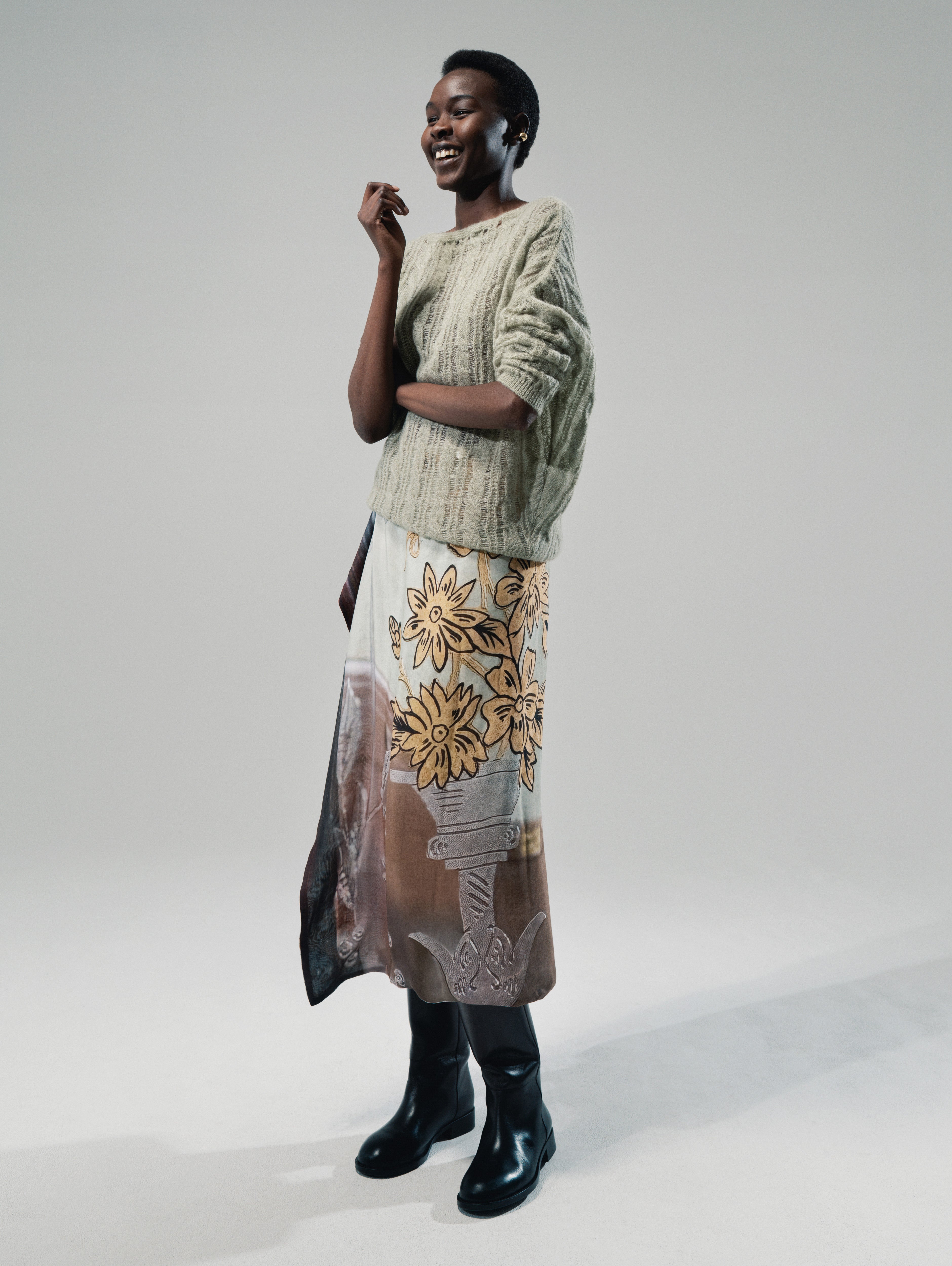
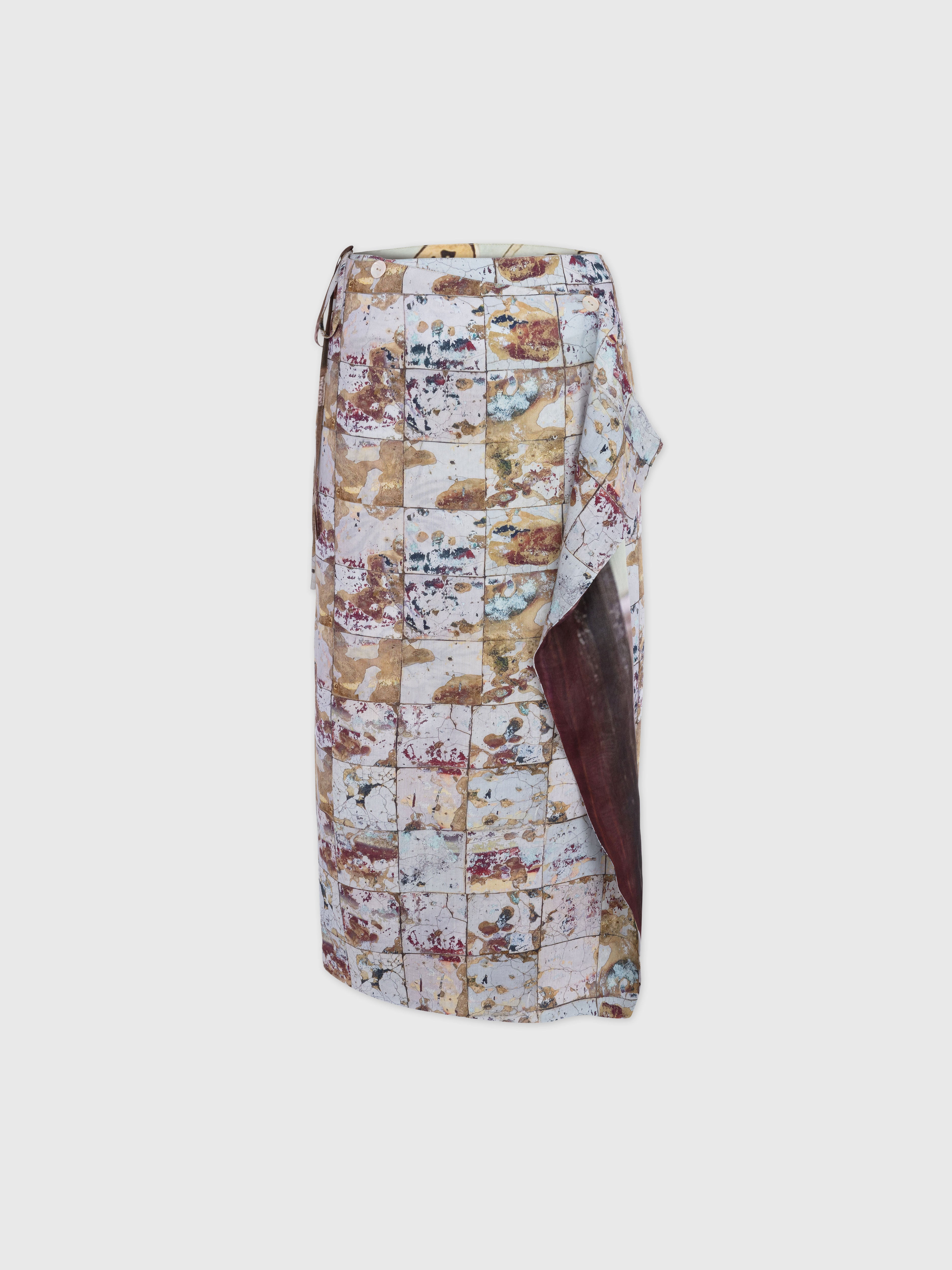
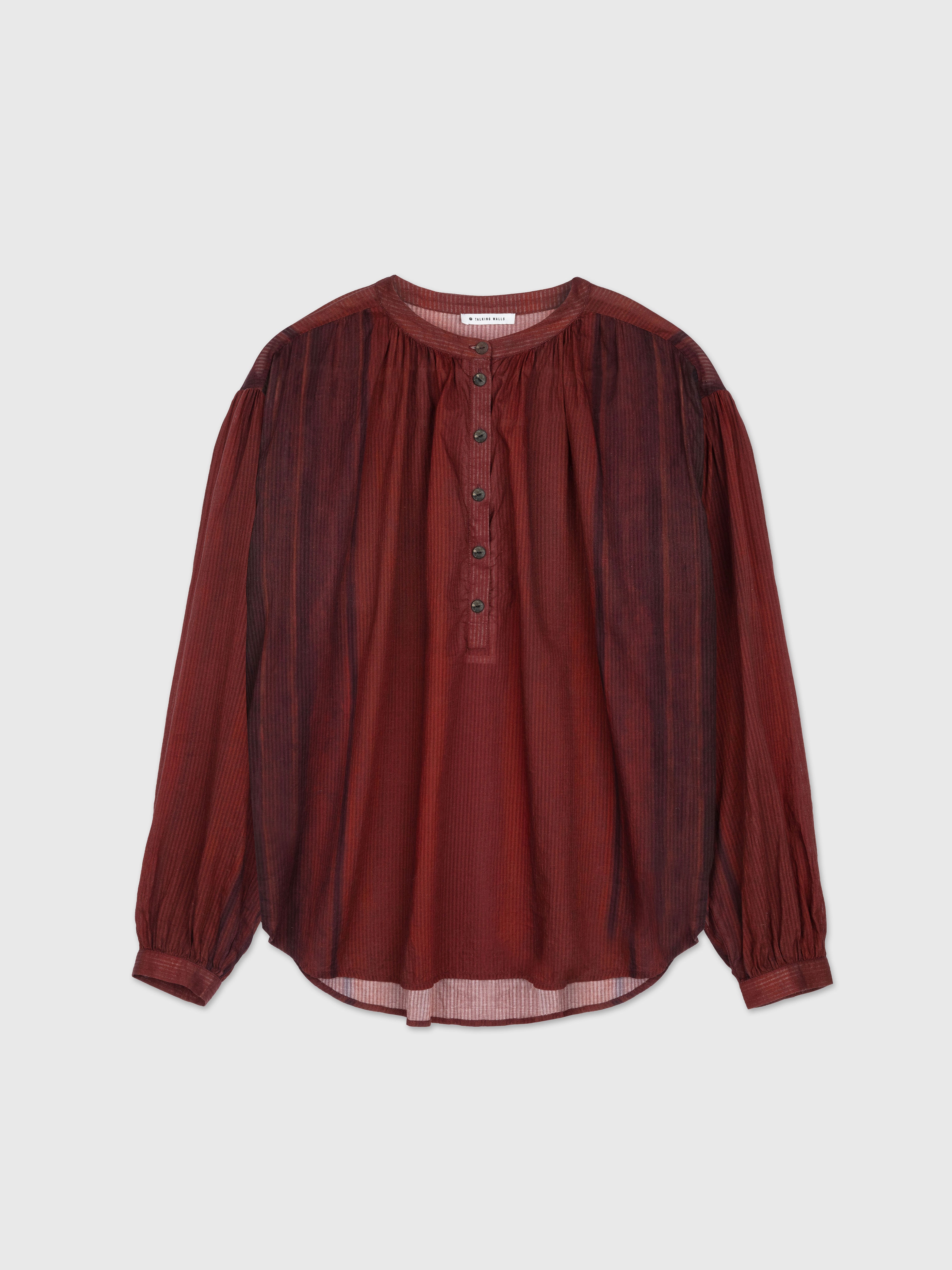
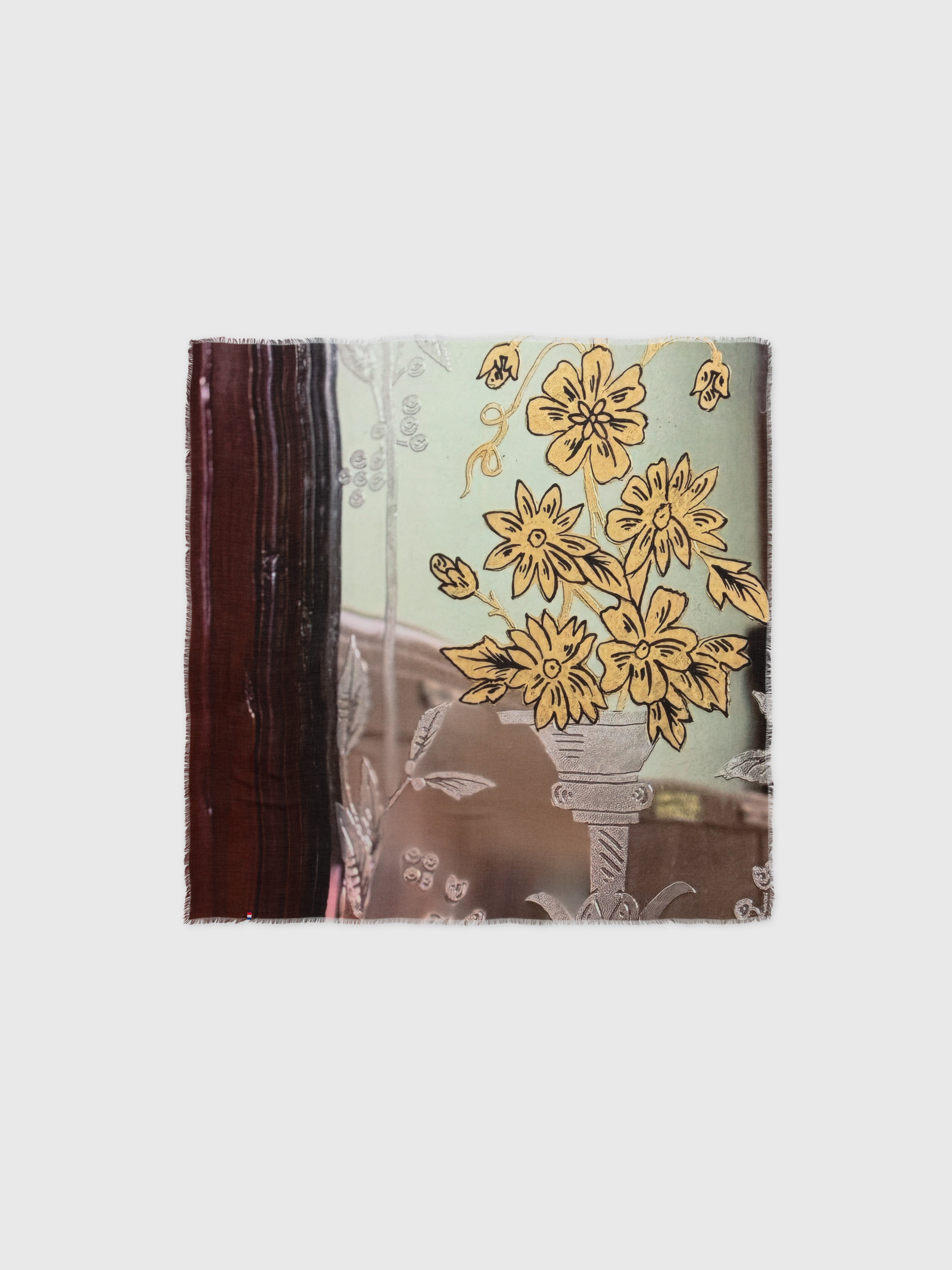
This image was discovered in Cochin, South India, inside a building carrying the name Cochinwallah on its windows. The word immediately evokes old Anglo-Indian naming traditions, where “wallah” referred to someone connected to a place, trade, or daily activity. A chaiwallah. A rickshawwallah. COCHINWALLAH almost sounding like “the one from Cochin.”
Which suited the atmosphere perfectly.
The carved teak frame, decorative crest, frosted floral engravings, and painted alpine landscape all carried traces of colonial-era interiors once common in trading houses, hotels, clubs, and merchant residences throughout Cochin. European romantic scenery quietly ageing inside tropical humidity.
Nothing here remained untouched. Moisture softened the glass. Certain floral details stayed remarkably sharp, while others dissolved into reflection, scratches, and time. Warm creams, faded golds, dusty browns, pale greens, and translucent whites created a palette that felt humid, faded, and deeply atmospheric.
The surrounding streets of Cochin carry the same layered tension. Colonial remnants beside tropical vegetation. Weathered façades, fading signage, cafés, workshops, and slow-moving streets where different eras still comfortably overlap.
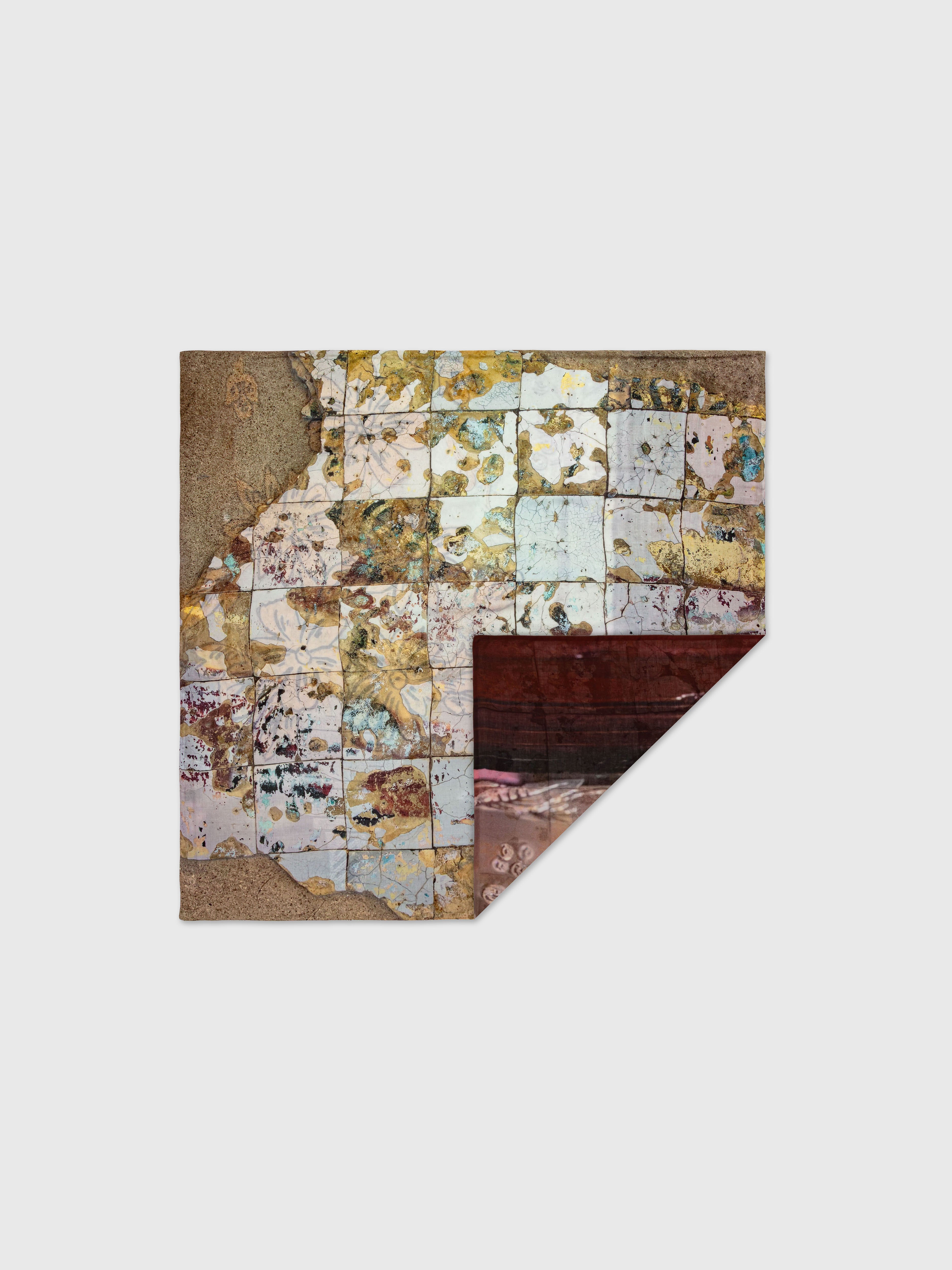
On textile, the translucent layering created remarkable softness and luminosity. Ornament almost floating through the fabric itself.
Some objects survive history beautifully simply because nobody rushed to replace them.