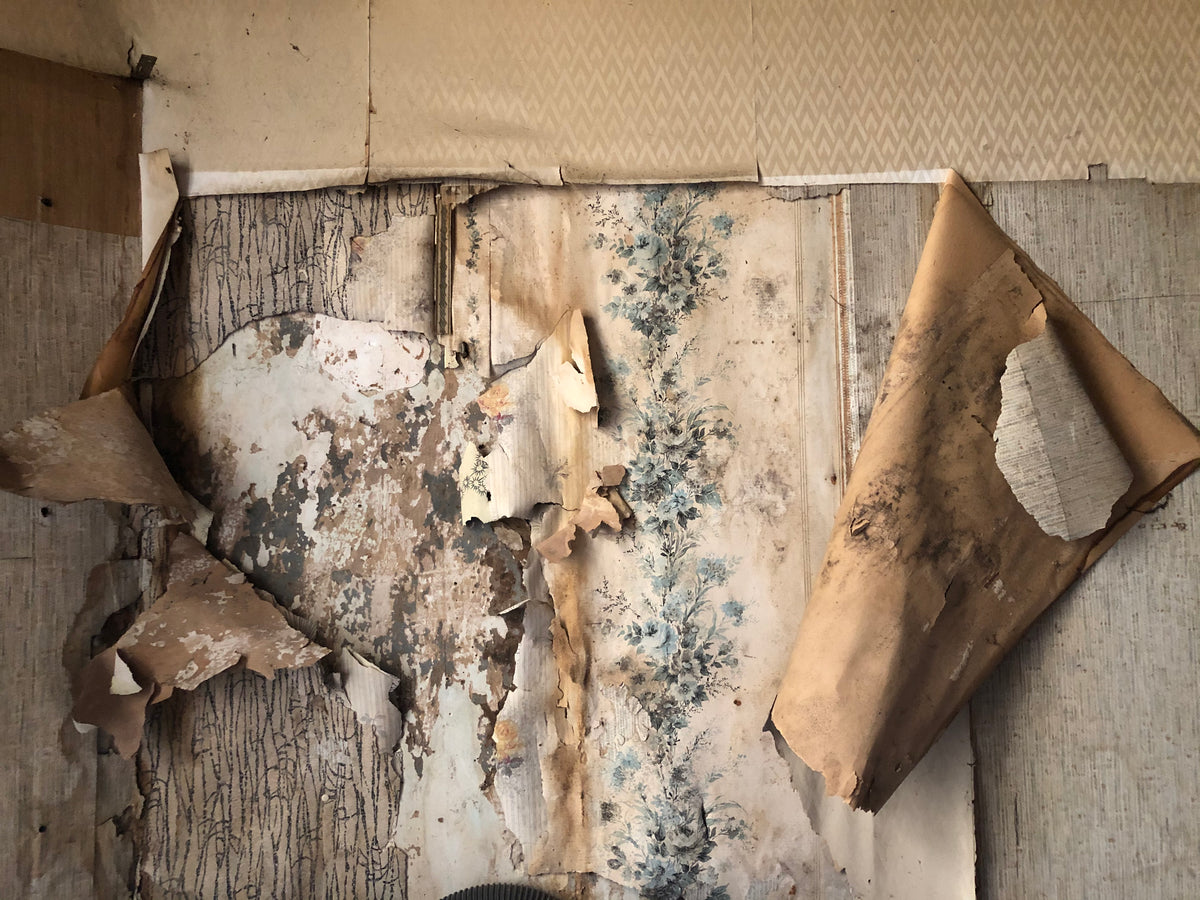
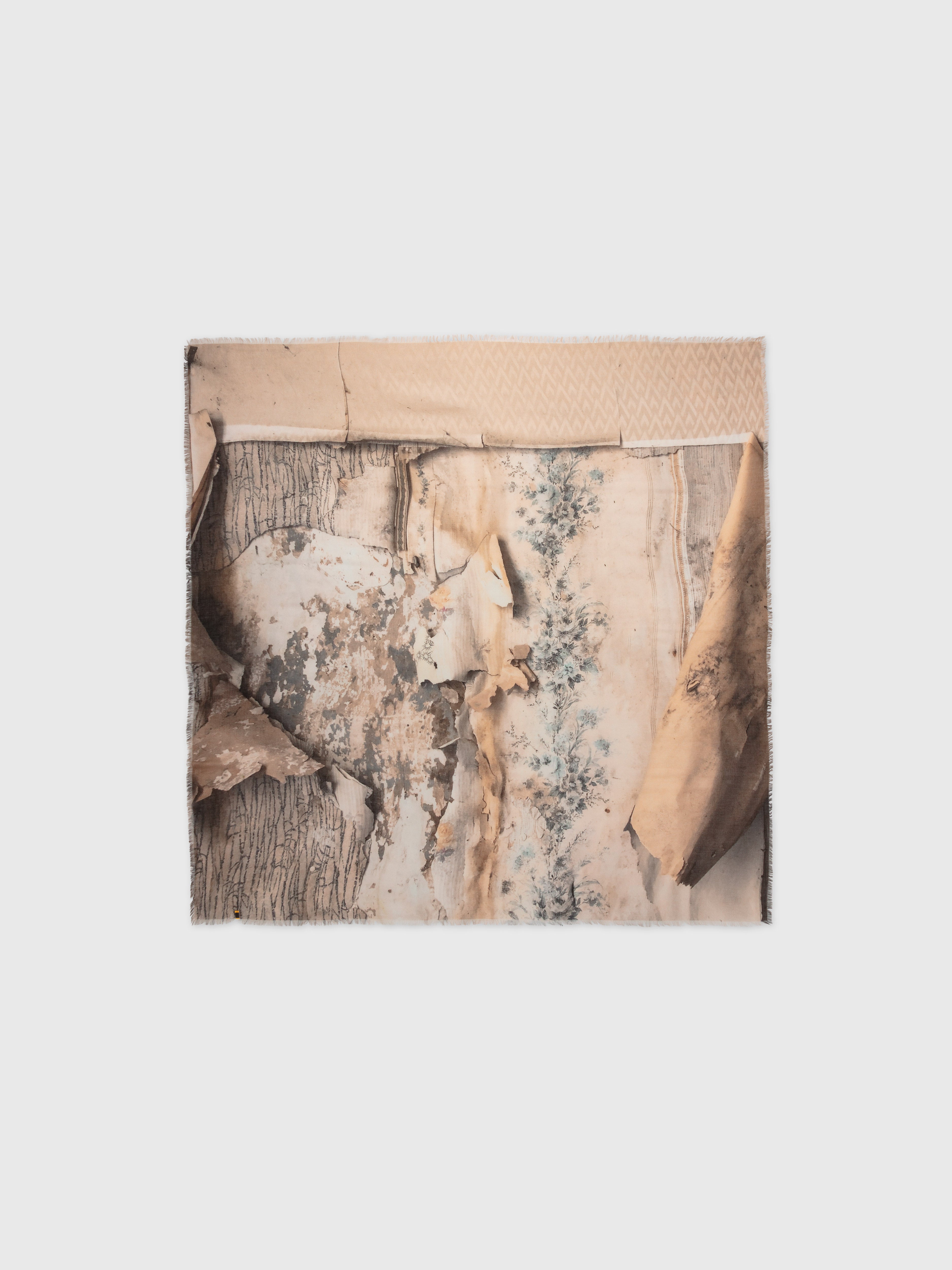
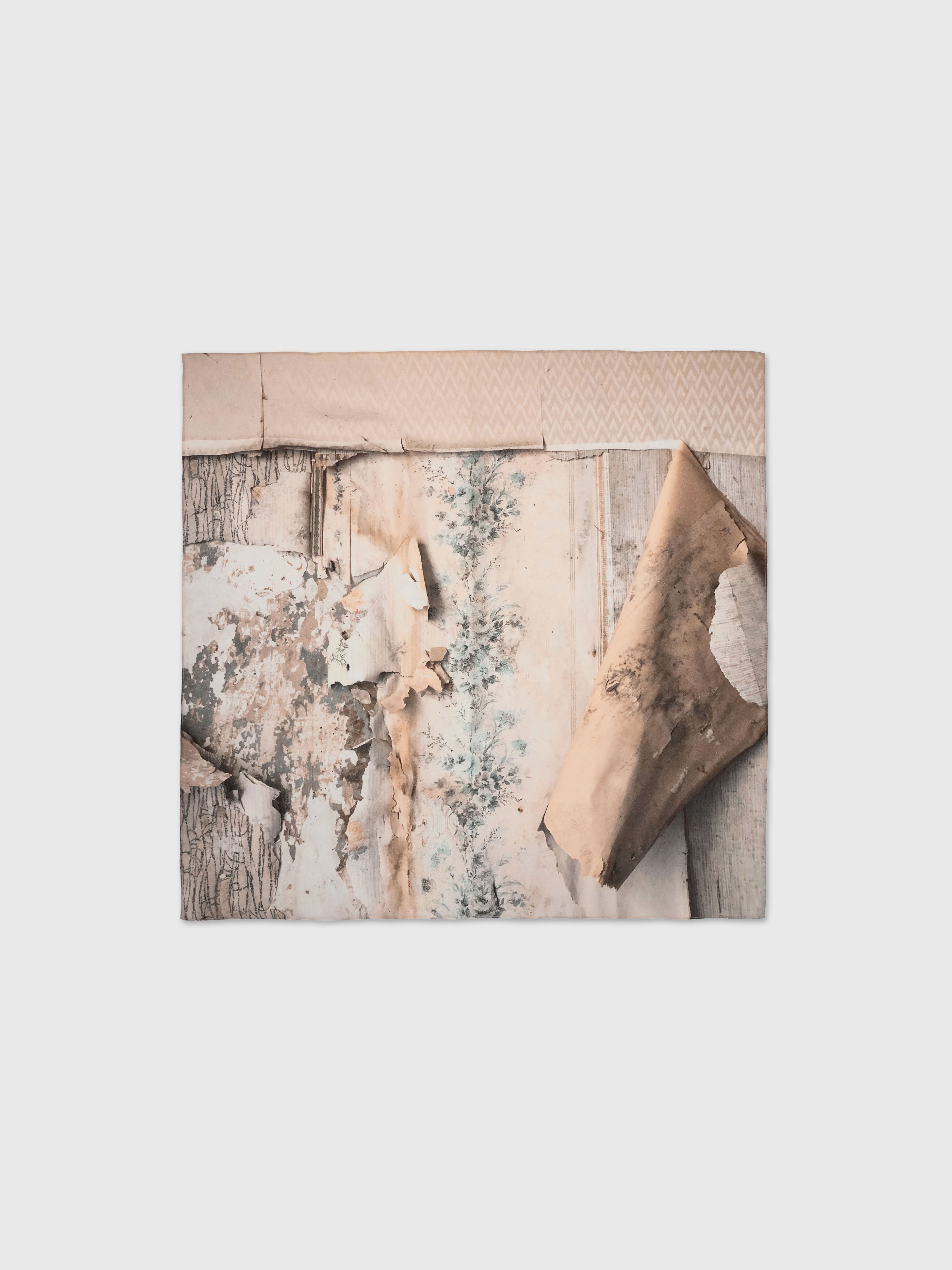
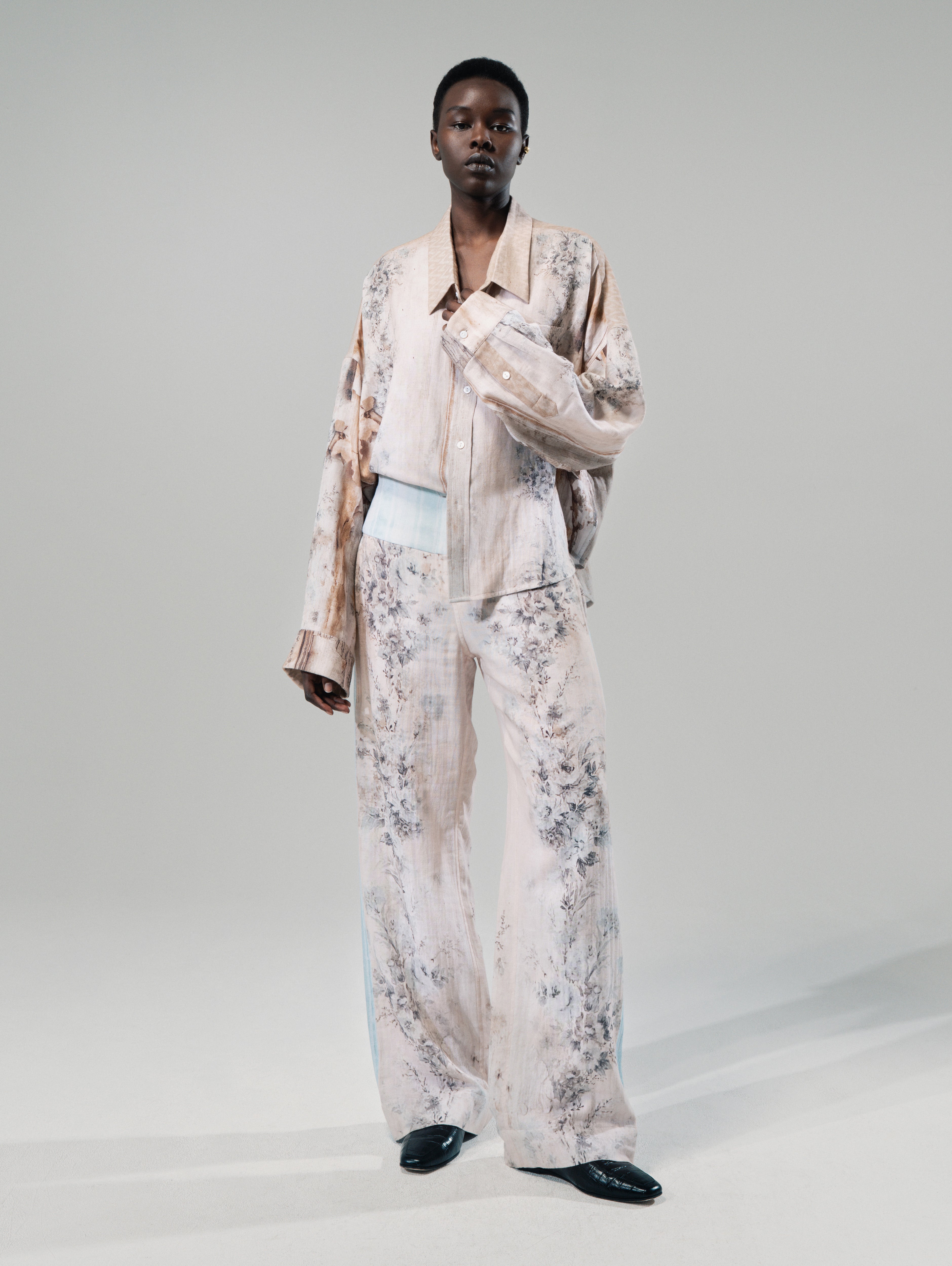
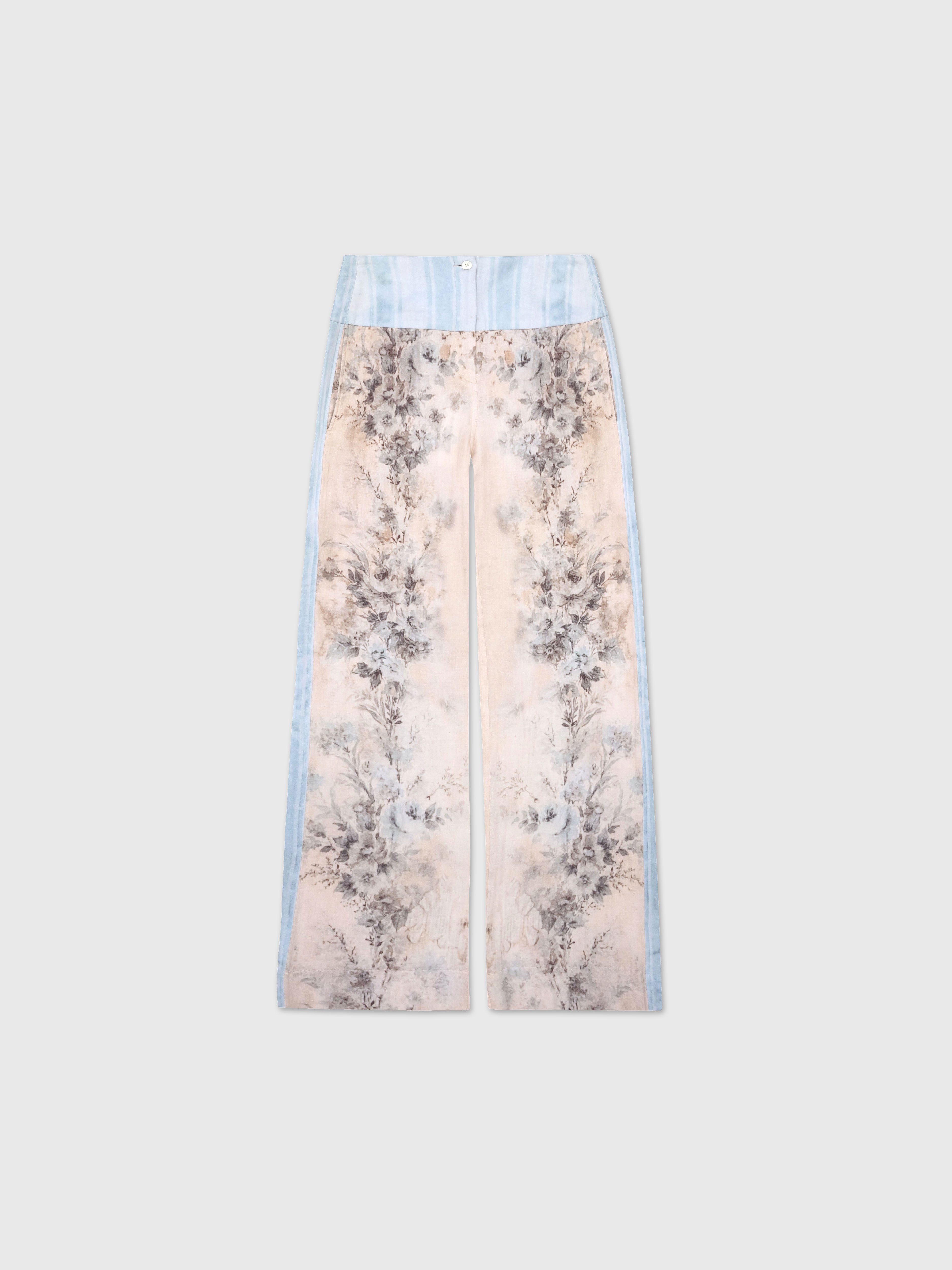
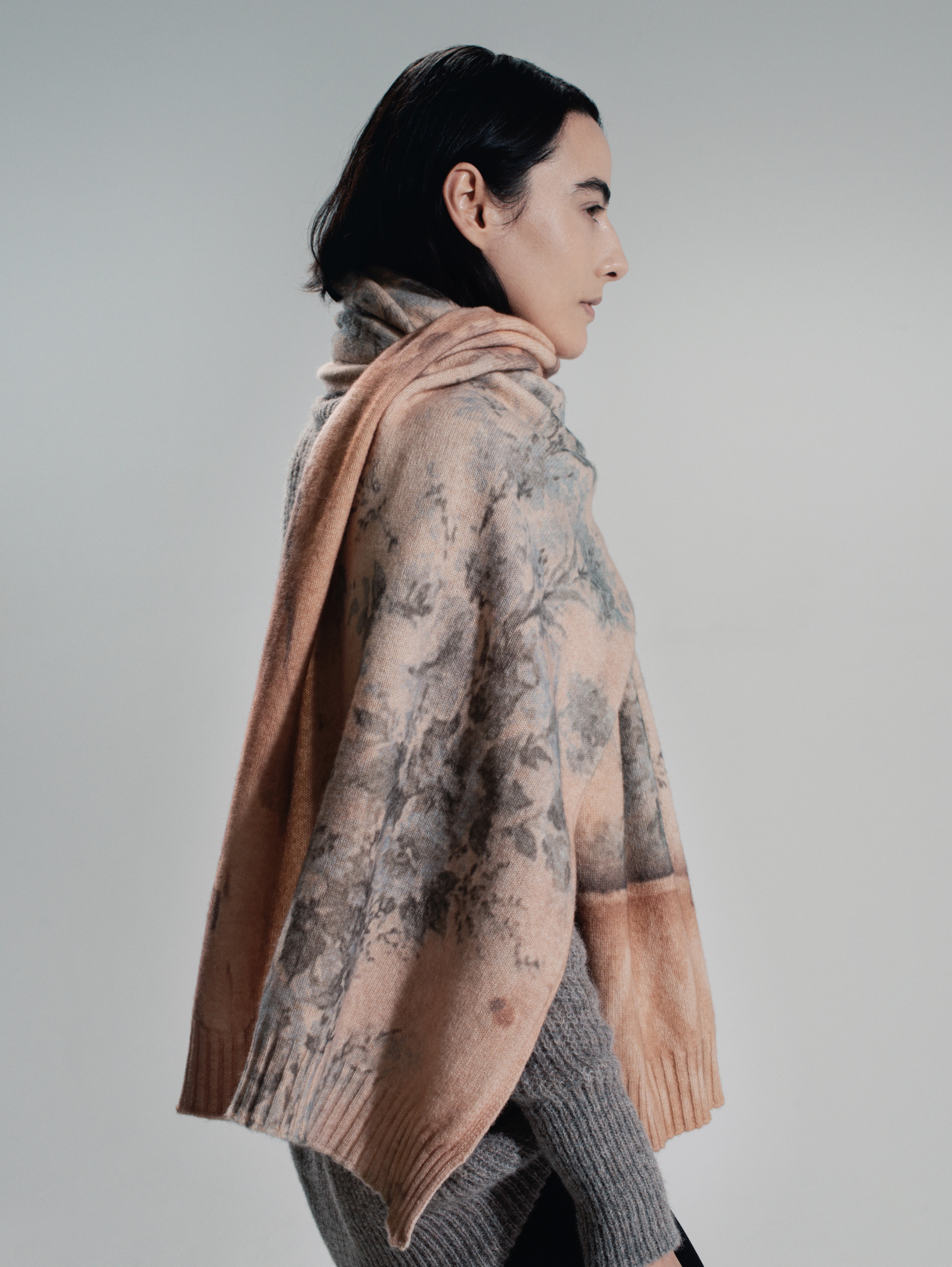
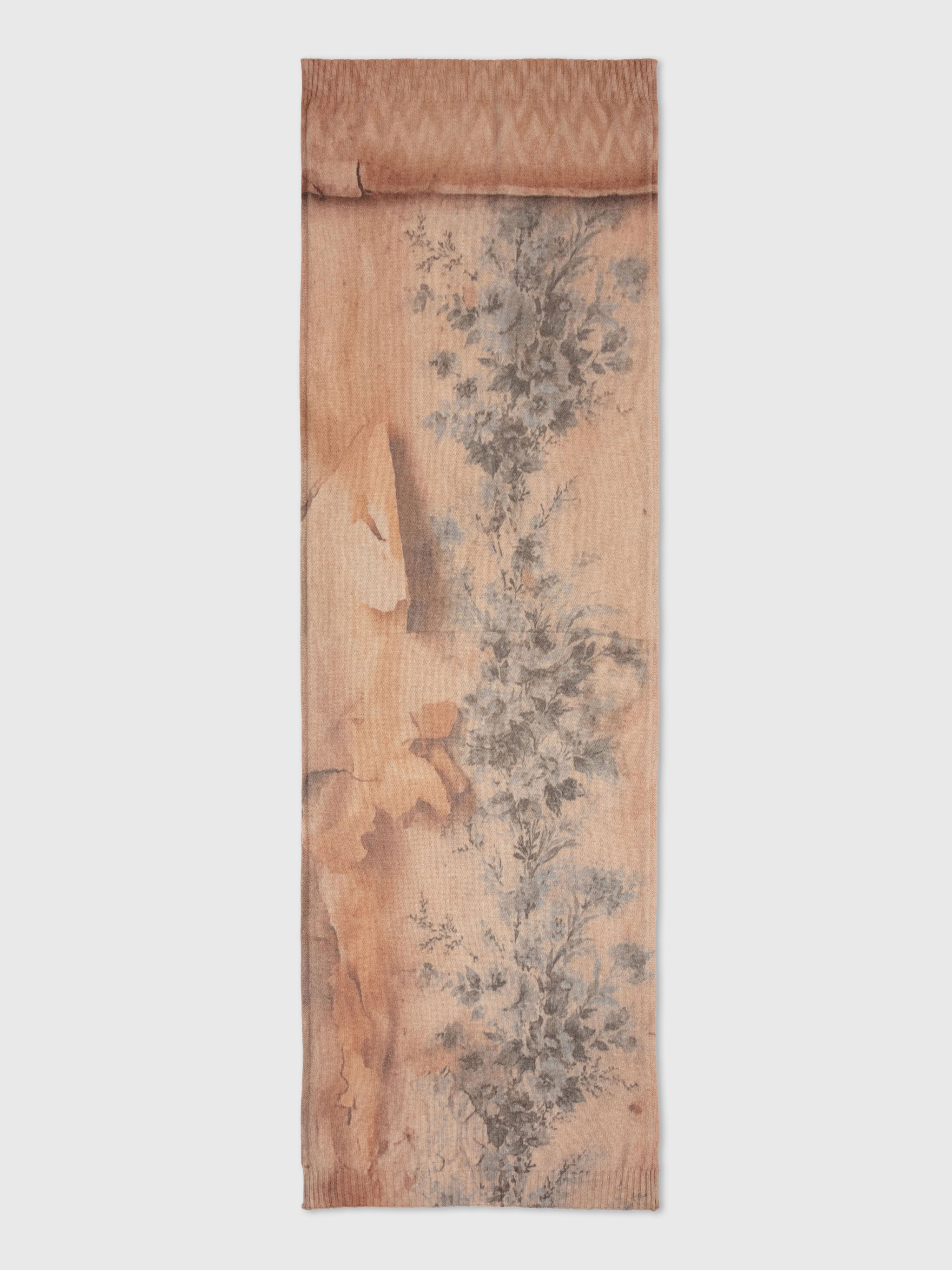
Discovered in an abandoned house in Poperinge, Belgium, this composition brings together faded florals, peeling wallpaper, worn textures, and surfaces marked by time.
Layers slowly separate from the wall, exposing fragments of older interiors underneath, delicate blue motifs softened by dust, light, and deterioration.
The image balances refinement and erosion with remarkable precision. Torn paper curls outward almost sculpturally, while weathered patterns and muted tones create depth without heaviness.
Cream, faded blue, warm brown, and grey merge into a palette that feels quiet yet richly layered. There is a particular beauty in wallpapers that loosen, curl, and begin their descent into history.
Not erased, but transformed. The decay reveals rather than destroys, allowing forgotten details to reappear through the surface itself.
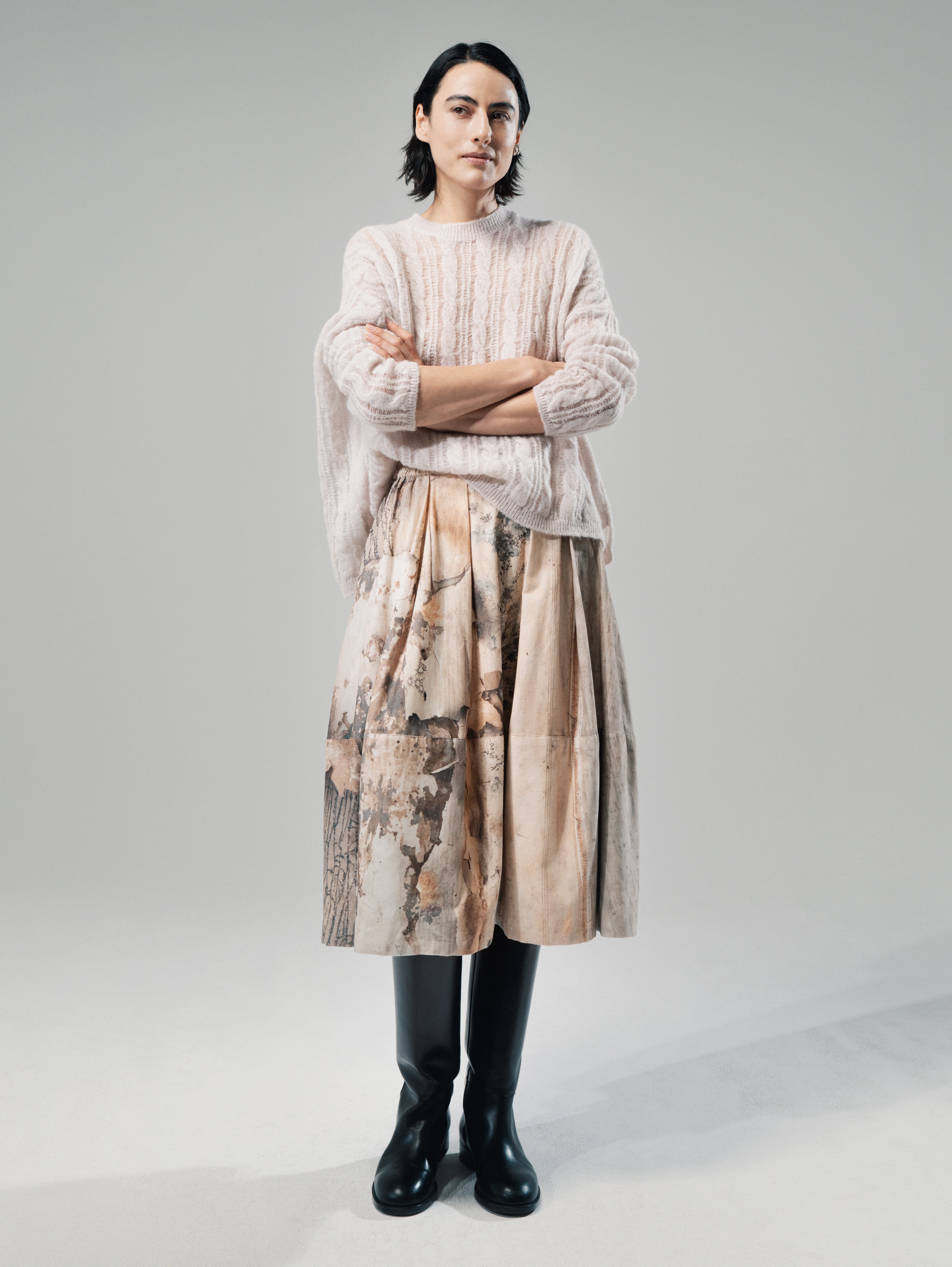
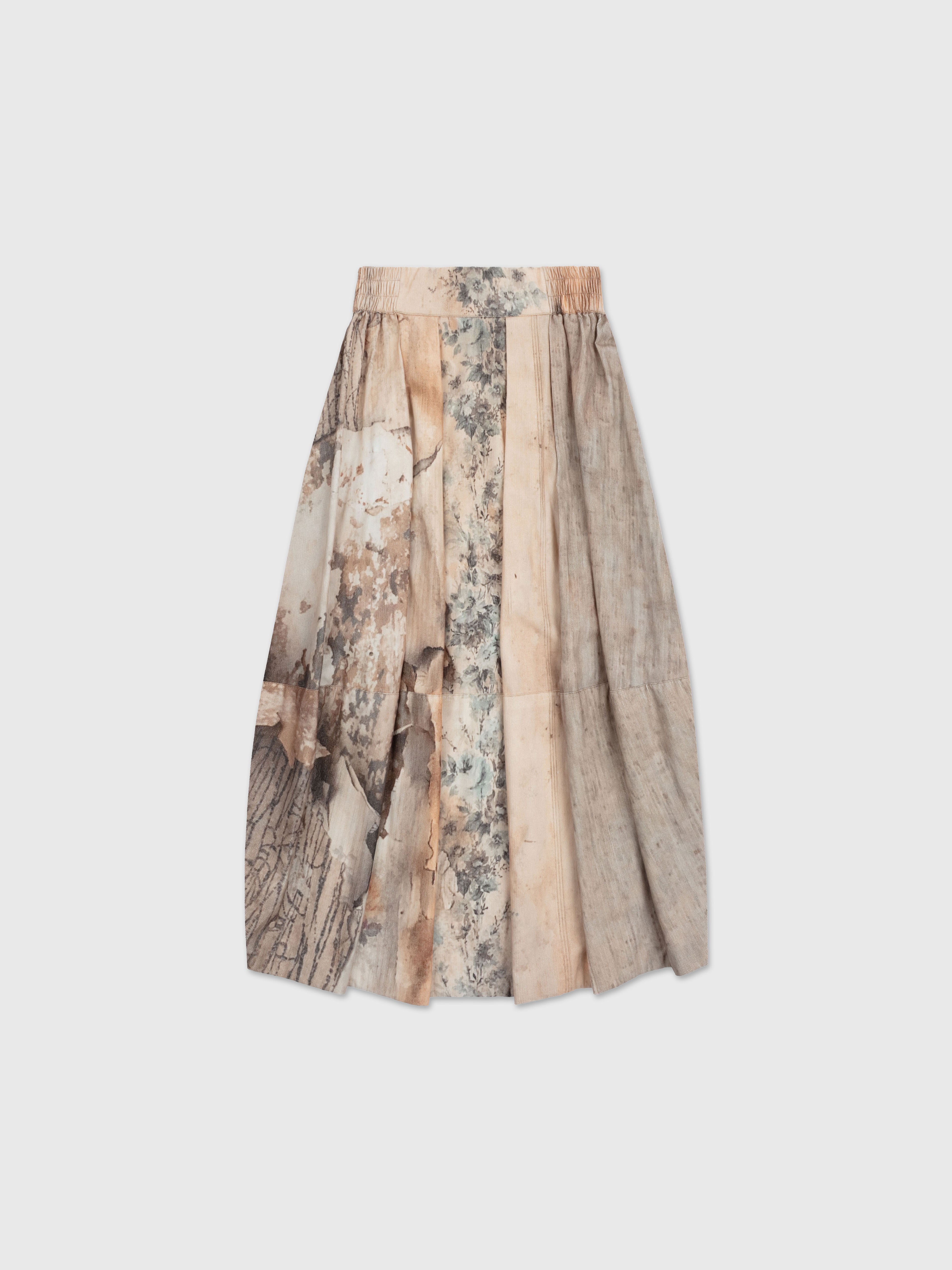
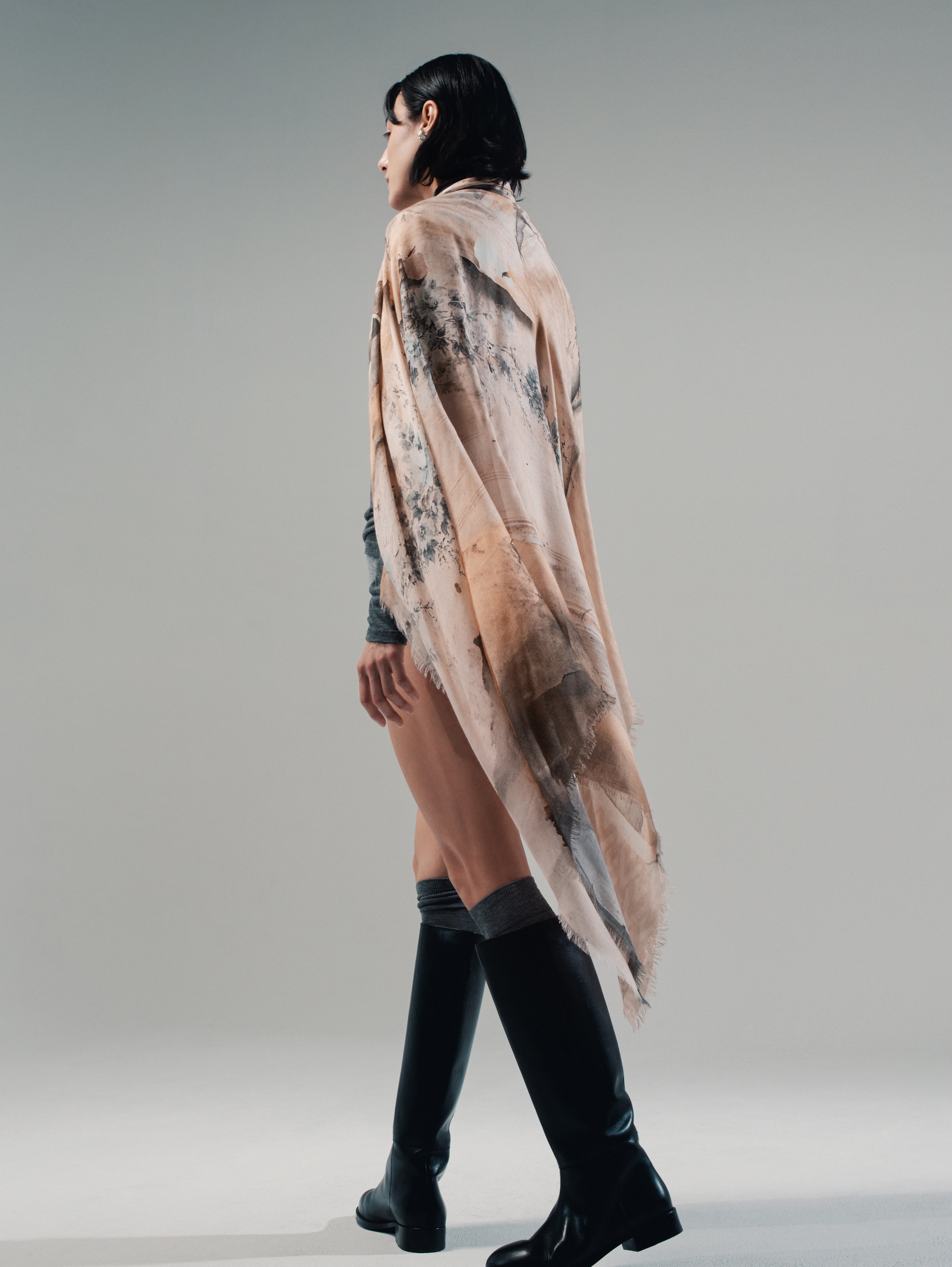
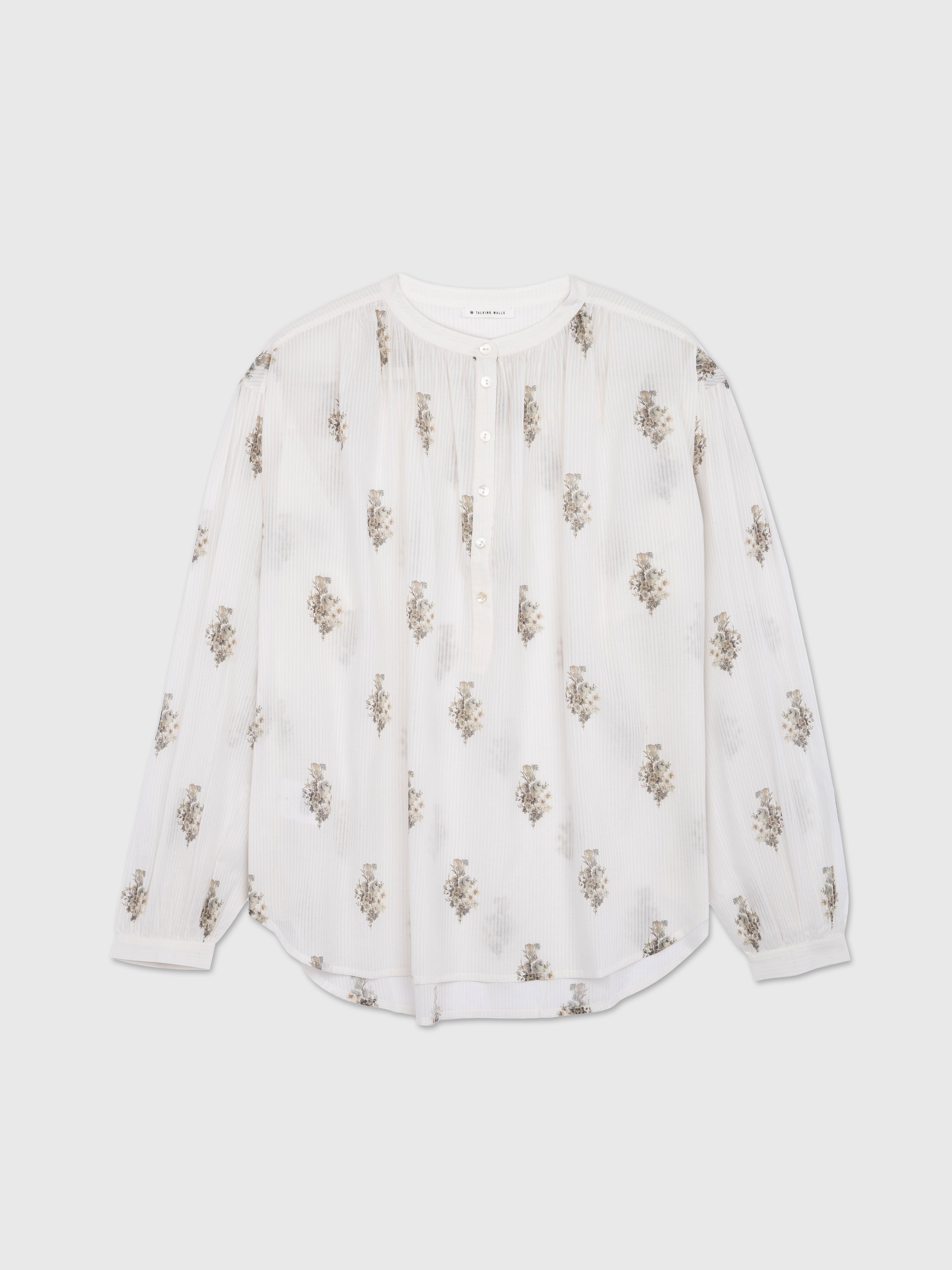
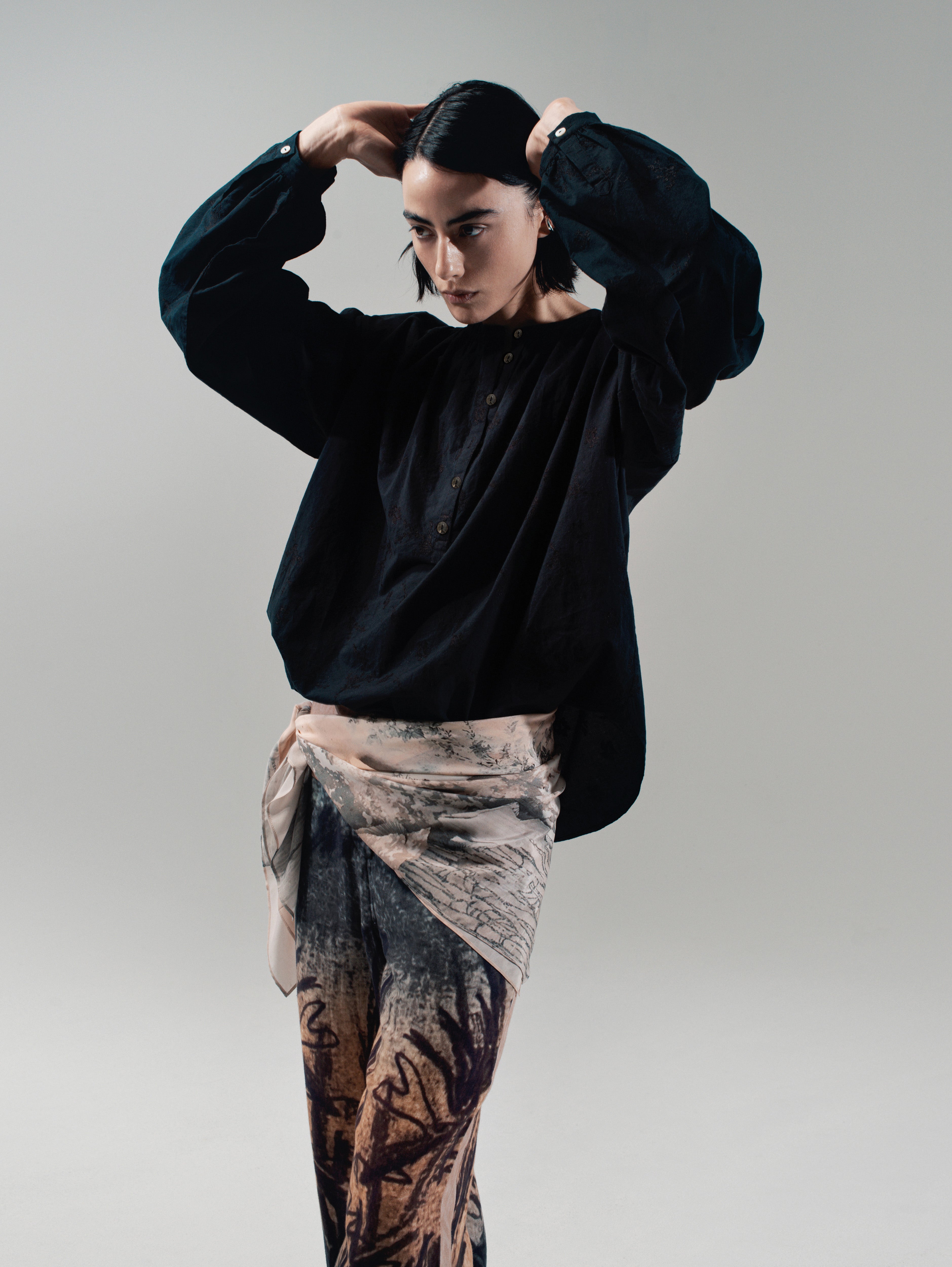
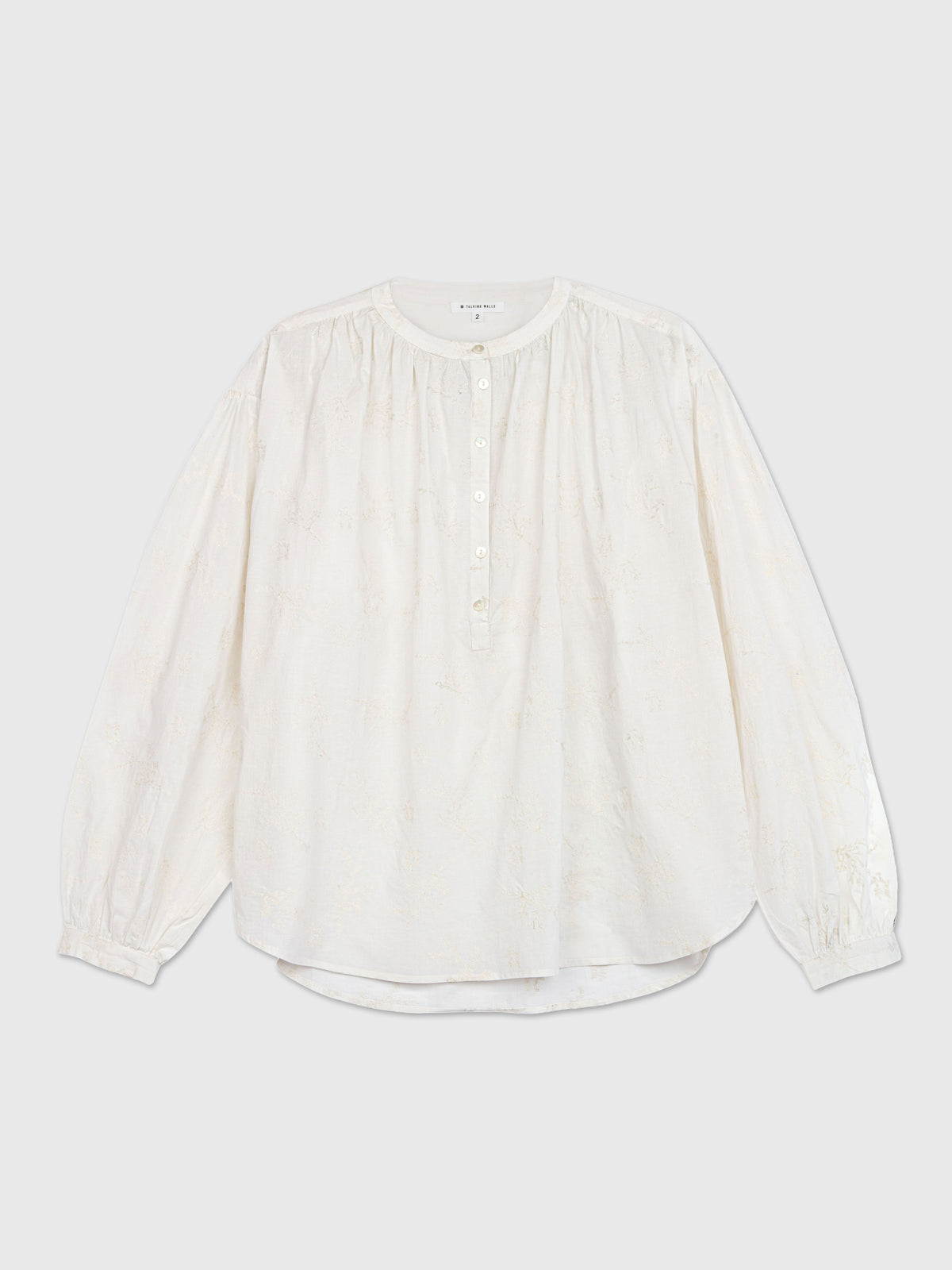
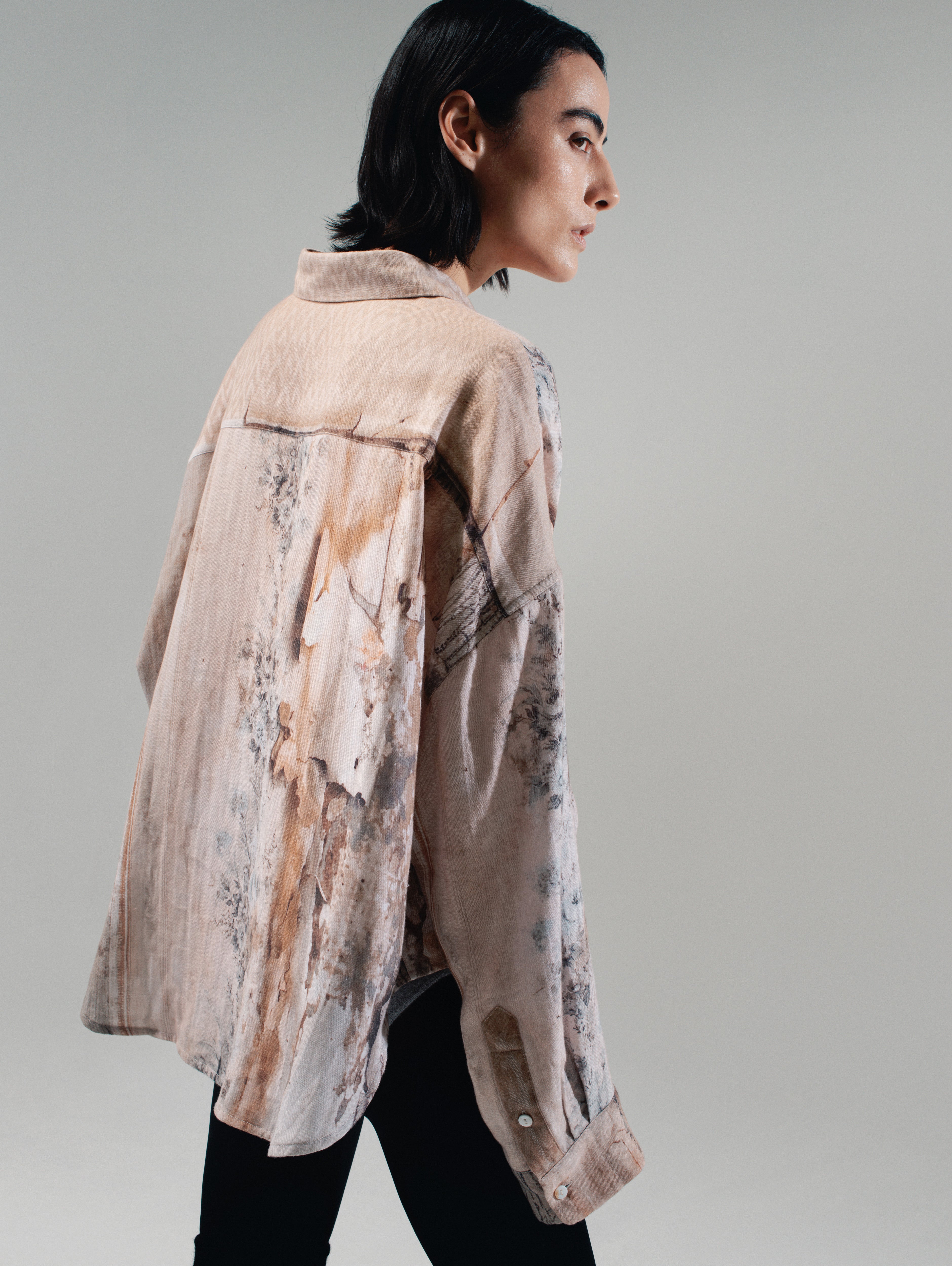
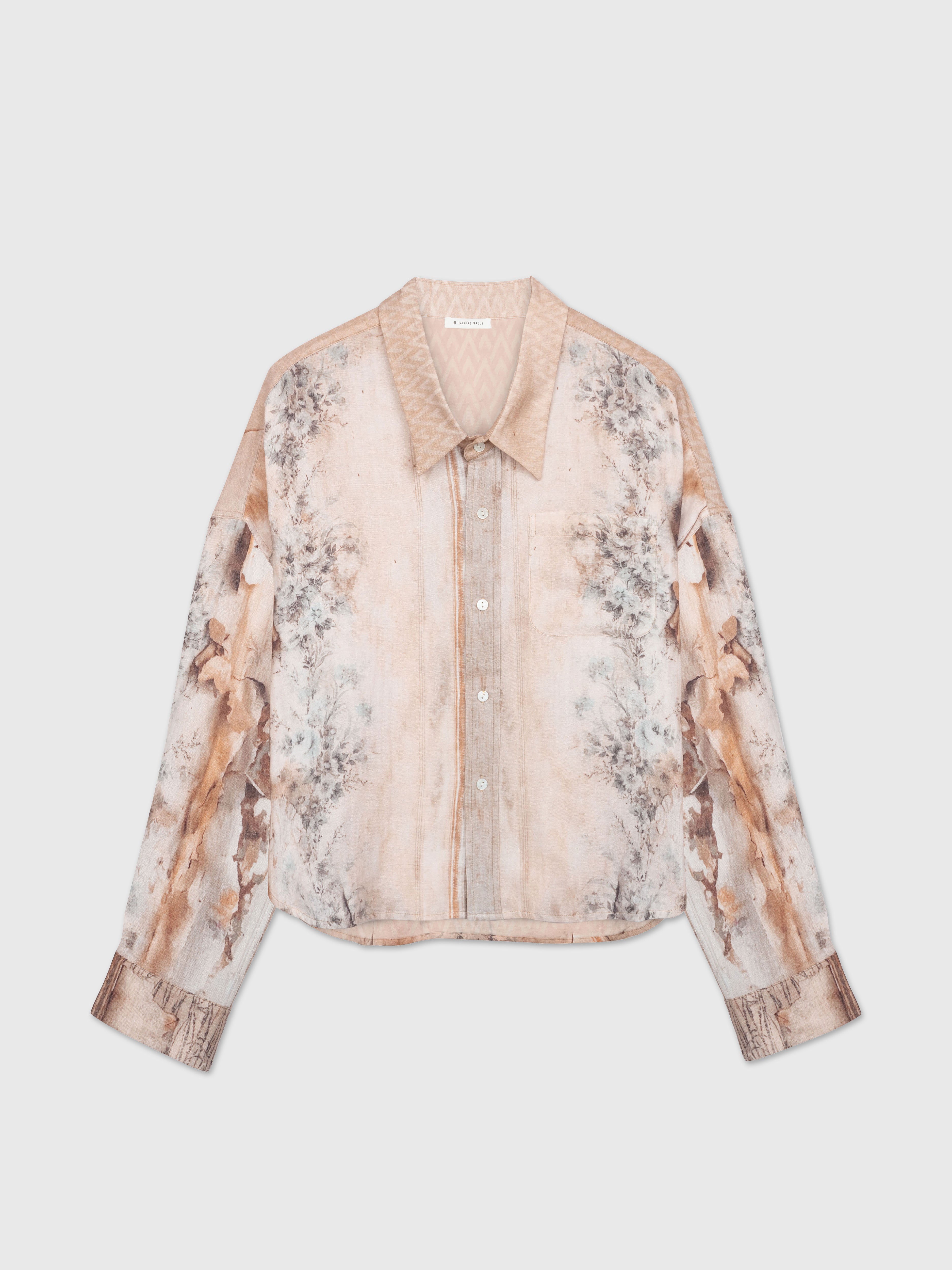
When translated into textiles, the composition retained this tension between softness and fragmentation. Floral elements emerge through fractured textures, while the irregular forms create movement and contrast across the garment.
DECAY became a study of time visible on a surface, where deterioration, texture, and elegance coexist naturally.