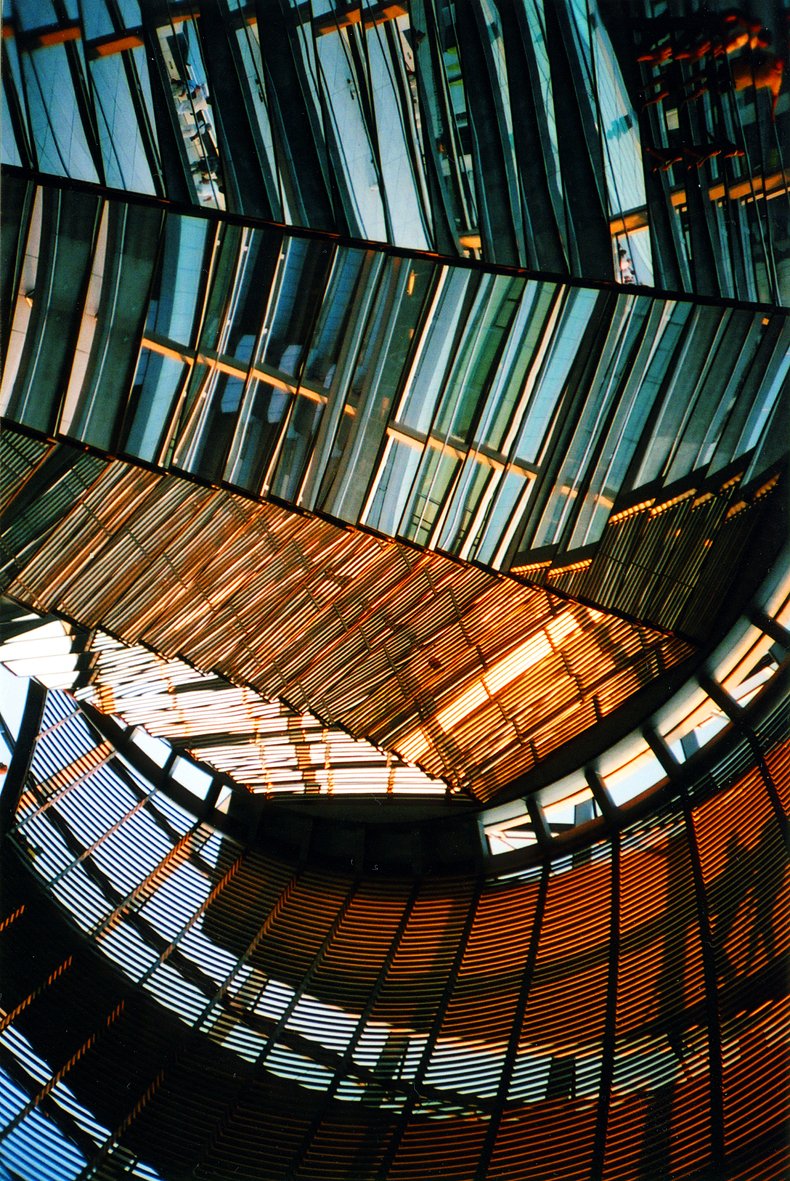
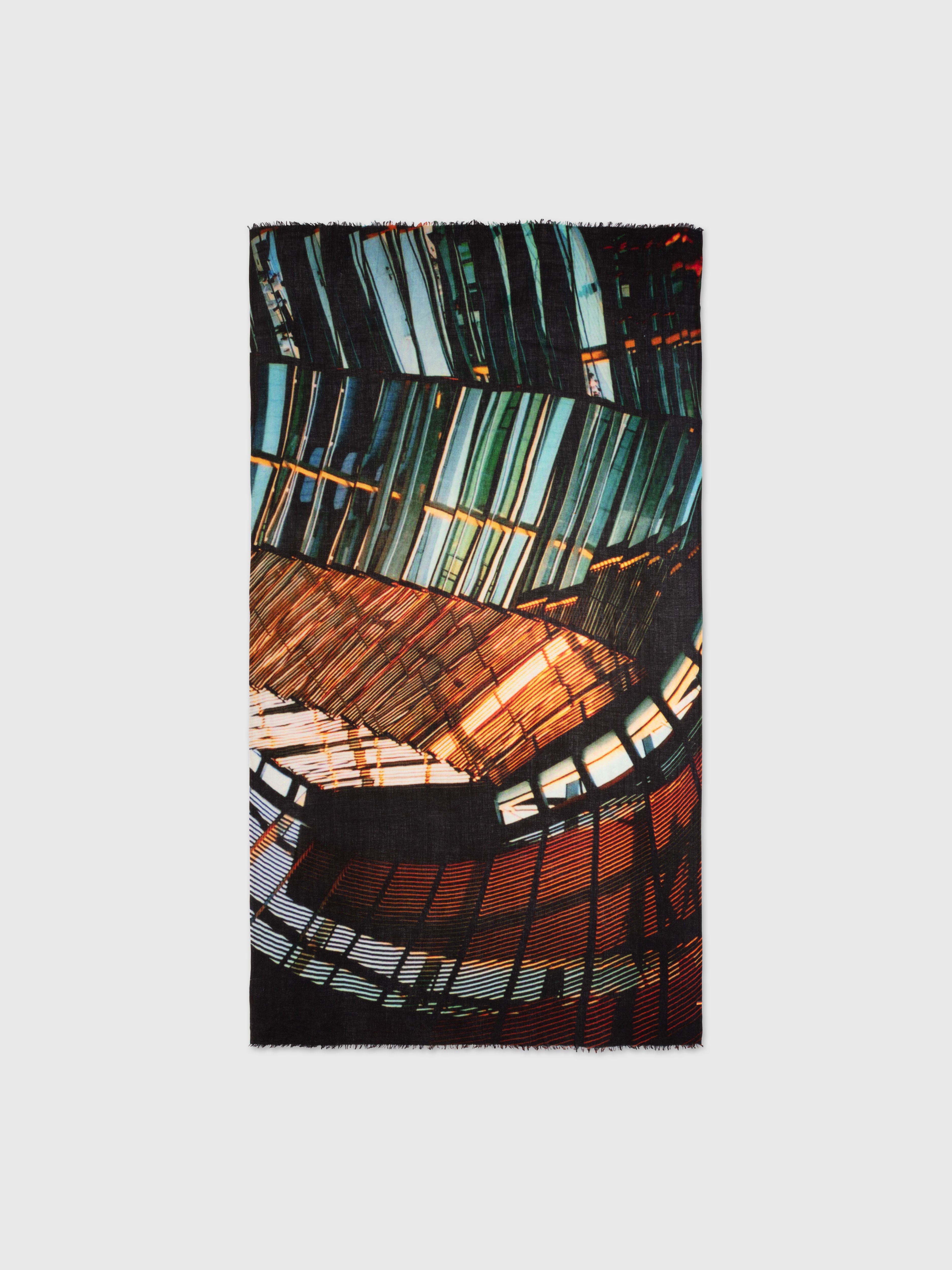
In Manila, reflections never seem to settle. Glass catches sky, traffic, shadow, and light all at once, folding the city back onto itself. Inside this building, the architecture almost stopped behaving like architecture. Steel lines curved unexpectedly, windows dissolved into mirrors, and warm amber light cut through cold blue surfaces like the final glow before nightfall.
What drew us in was the tension between control and distortion. The structure is precise, engineered, almost severe — yet the reflections constantly interrupt it. Straight lines bend. Layers overlap. The entire building feels as though it is moving, even while standing completely still.
There is something cinematic about it too. The glowing copper tones against the dark glass create a strange warmth inside an otherwise modern, almost futuristic space. It feels both distant and familiar at the same time. Like a memory of tomorrow.
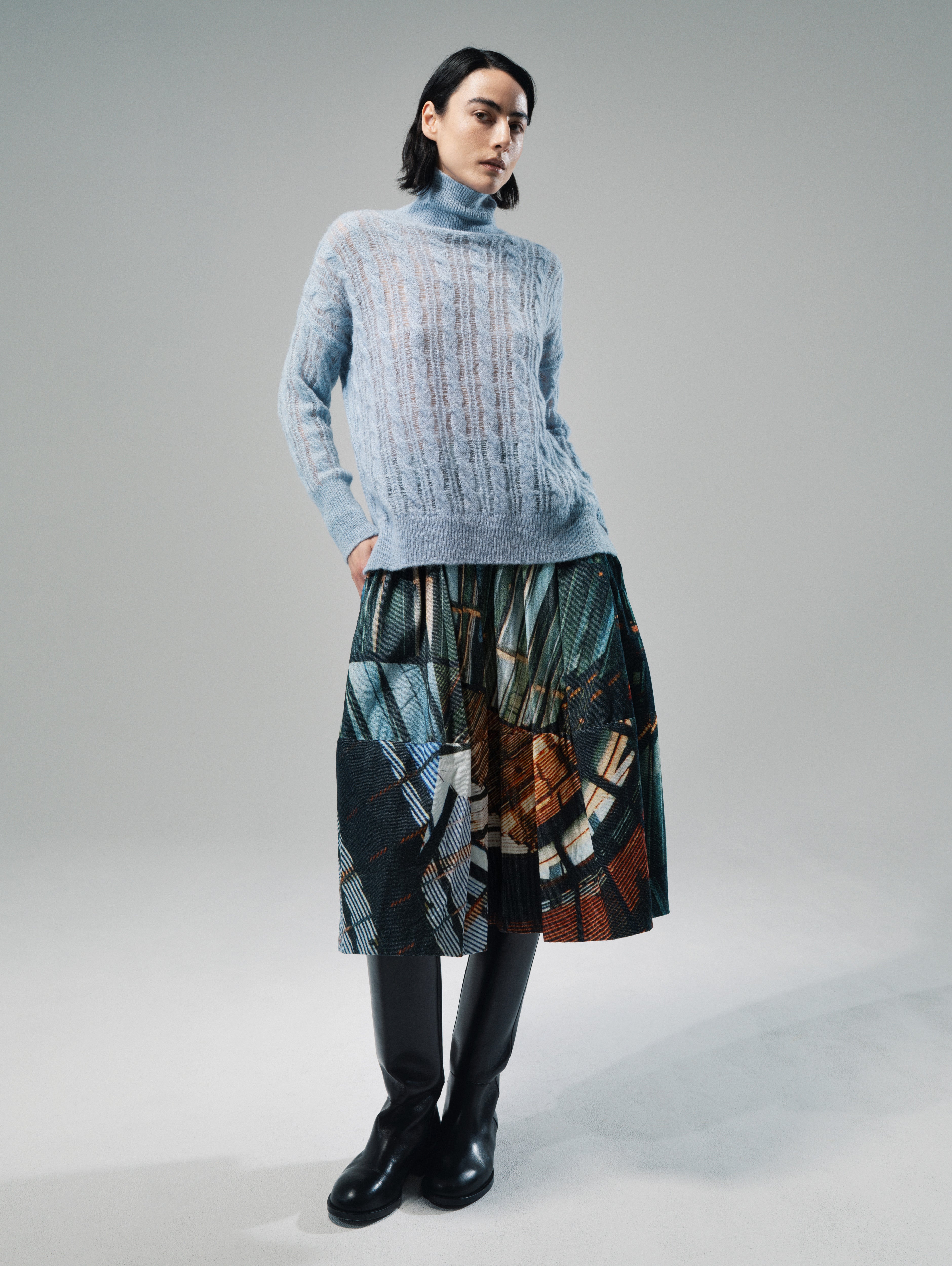
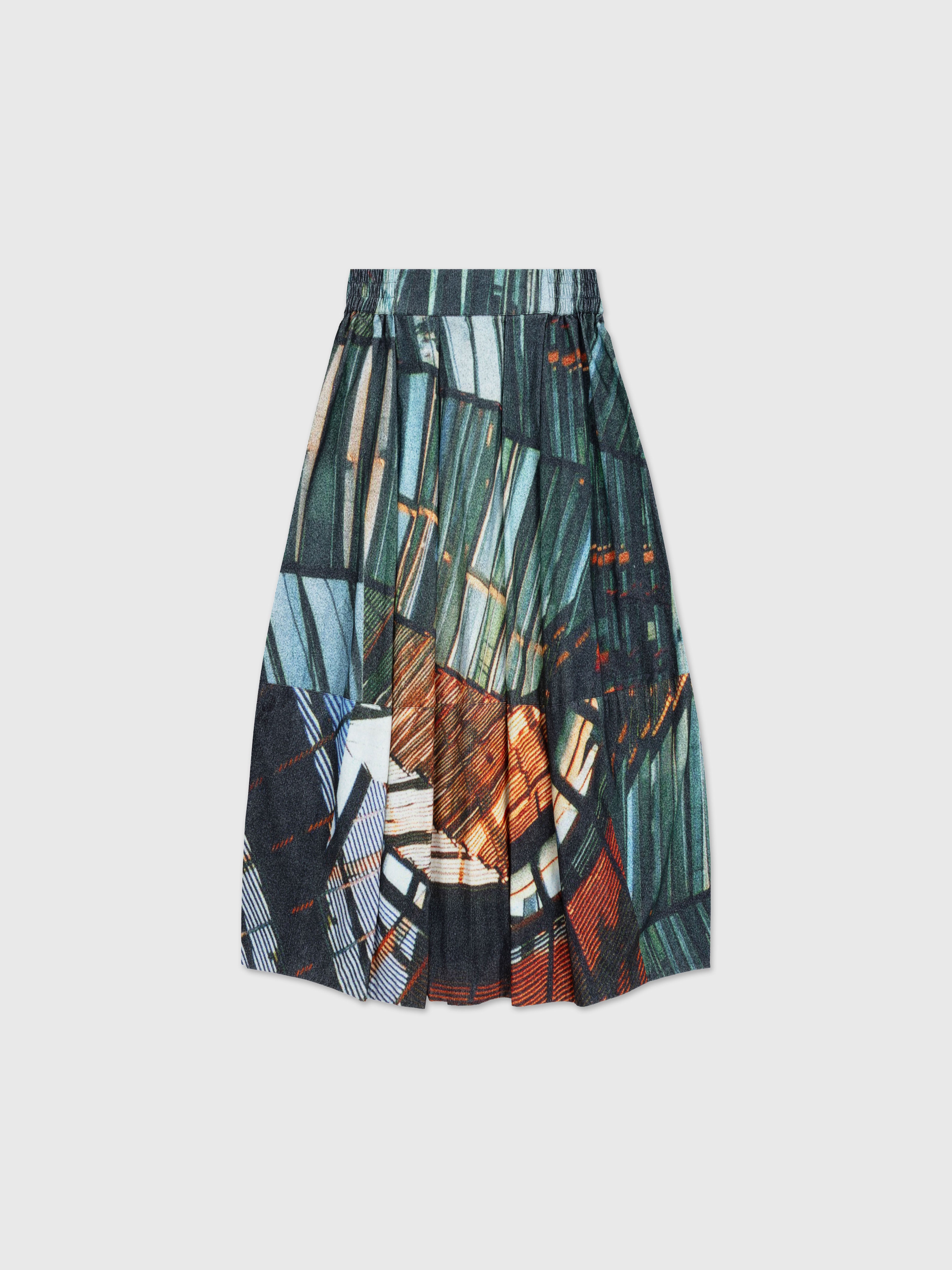
When translated onto fabric, the image became even more fluid. The reflections wrapped naturally around the body, while the repeating lines created rhythm, movement, and depth. From afar, graphic and architectural. Up close, fragmented and almost impossible to fully read.
CALEIDOSCOPE became a moment where the city briefly lost its sharp edges — turning steel, glass, and light into something softer, warmer, and unexpectedly human.